For years, I have been saying technology alone will not solve humanity’s greatest challenges. It can help us build smarter cities, safer infrastructure, more efficient manufacturing systems, and more connected healthcare networks—but technology without human responsibility, ethics, and purpose can also be dangerous. Like I always say on The Peggy Smedley Show, with great technology comes great responsibility. Now, one of the world’s most influential spiritual leaders is echoing many of these same concerns.
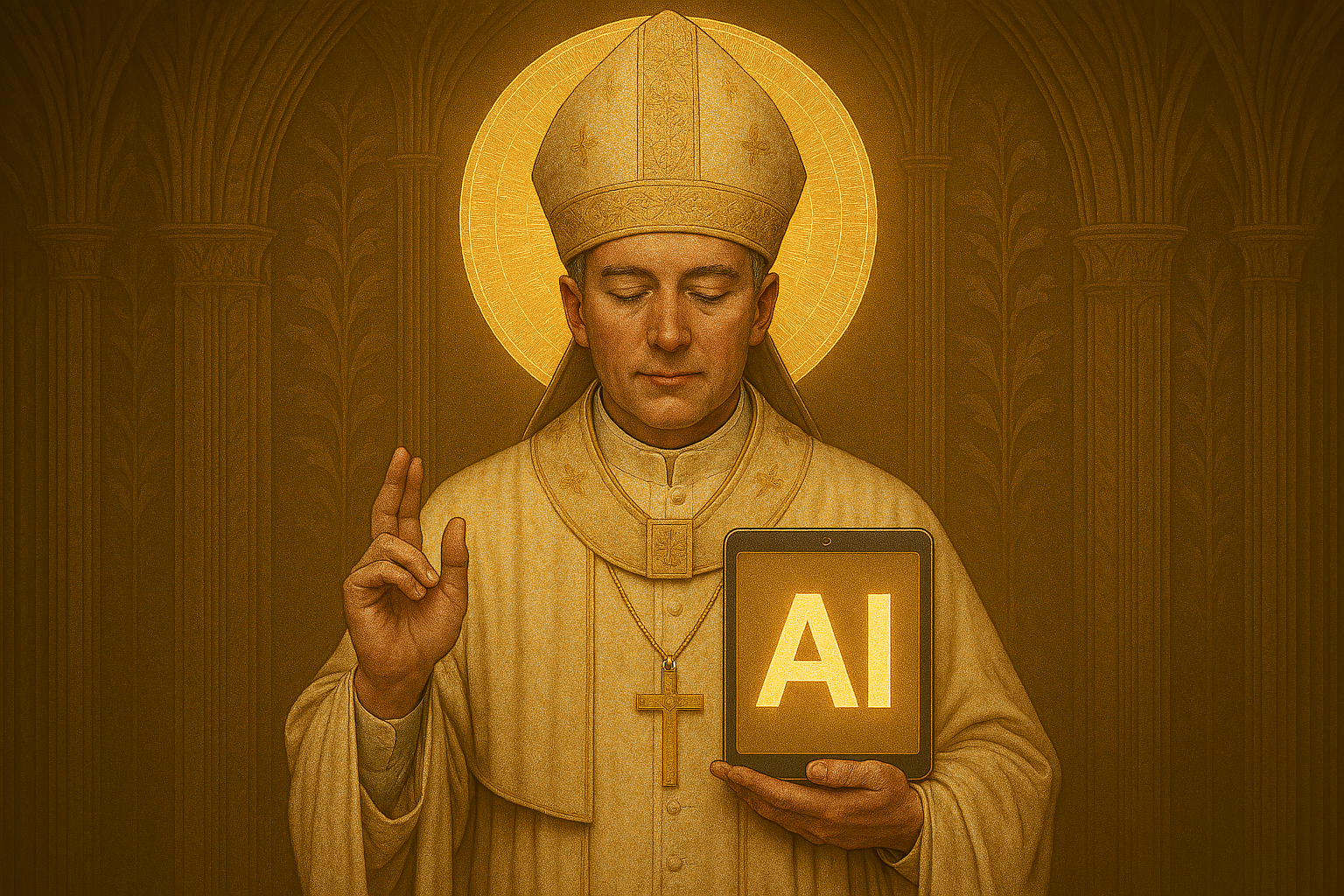
In his recent encyclical, Pope Leo XIV warns humanity stands at a defining crossroads in the age of AI (artificial intelligence) and other emerging technologies. He frames the choice in powerful terms: We can either build a new Tower of Babel, or we can build a city where humanity and God dwell together in dignity and justice.
A bit of context: The biblical story of Babel was not simply about technology or ambition. It was about pride, centralized power, and humanity believing it could elevate itself above moral responsibility. And if we are honest, that warning feels incredibly relevant today.
We are living through a technological revolution unlike anything in human history. AI is reshaping how we work, communicate, govern, diagnose disease, educate children, protect infrastructure, and even make decisions. That is exactly why this moment demands clarity of thought and shared responsibility.
Technology Is Not the Enemy
One of the most important points in the encyclical is that technology itself is not inherently evil. In fact, the Pope acknowledges technological innovation has always been part of human progress and human creativity. It has improved living conditions and expanded possibilities across every generation.
I have long argued the same thing. Technology is a tool. It reflects the intentions, values, and priorities of those who create it, fund it, regulate it, and deploy it. AI systems are not neutral simply because they are powered by algorithms. The data we choose, the business incentives we prioritize, and the governance structures we establish all shape outcomes.
That means the real question is not whether we should say yes or no to AI. The real question is: What kind of future are we building with it? Are we building systems that empower humanity—or systems that commoditize people into data points? Are we creating technologies that strengthen communities—or technologies that isolate individuals while concentrating power into the hands of a few? Are we designing AI to serve the common good—or merely shareholder value?
Asking the Tough Questions
One observation from the Pope deserves particular attention from business leaders, policymakers, and technologists alike: technological power today has become increasingly private. A small number of corporations now influence enormous portions of the digital ecosystem—from cloud infrastructure and AI models to social media platforms and data collection systems. These companies are shaping public discourse, economic opportunity, labor markets, education, and even democratic processes.
The challenge here is governance, which is something I have been calling out all along. We need to ask the tough questions. Who controls these systems? Who benefits from them? Who is left behind? And who is accountable when harm occurs?
As AI becomes more autonomous and integrated into everyday life, we need stronger regulatory frameworks, clearer ethical guardrails, and broader collaboration between government, industry, academia, faith communities, and civil society.
Avoiding the Babel Syndrome
Perhaps the most striking phrase in the encyclical is the warning against what the Pope calls the Babel syndrome. He describes it as the idolatry of profit, the sacrifice of the weak, and the dangerous belief that everything—including the human person—can be reduced to data, metrics, and performance.
This is where the AI conversation becomes deeply human. In today’s digital economy, there is increasing pressure to quantify everything: productivity scores, engagement metrics, predictive analytics, behavioral patterns, biometric identifiers, and algorithmic rankings. But human beings are not datasets.
A person’s dignity cannot be fully translated into code. Innovation without humanity eventually creates systems optimized for efficiency rather than compassion, speed rather than wisdom, automation rather than understanding. And this is where leadership matters most.
The companies, engineers, policymakers, educators, and innovators building tomorrow’s AI systems must recognize that just because something can be built does not automatically mean it should be deployed without restraint or oversight.
Shared Responsibility in the AI Era
The future of AI requires shared responsibility. Industry leaders must prioritize ethical design and transparency. Governments must establish balanced regulations that protect citizens without stifling innovation. Educators must prepare future generations for a rapidly changing workforce. Faith leaders and philosophers must continue raising moral questions about human dignity and purpose. And citizens themselves must remain engaged in shaping the digital future rather than passively accepting it.
This is not just a technical conversation. It is a societal conversation. And perhaps most importantly, it is a human conversation.
I remain optimistic about what AI and emerging technologies can achieve. I believe they can help us address some of the world’s biggest challenges—from infrastructure resilience and healthcare access to energy efficiency and industrial safety.
But optimism without responsibility is dangerous. The Pope’s message serves as an important reminder that innovation must remain anchored in humanity. Technology should elevate the human experience, not diminish it.
The choice before us is not simply about artificial intelligence. It is about the kind of civilization we want to build. Will we construct a modern Tower of Babel driven by power, profit, and control? Or will we build a future grounded in responsibility, collaboration, and the common good? That decision belongs to all of us.
Want to tweet about this article? Use hashtags #IoT #sustainability #AI #5G #cloud #edge #futureofwork #digitaltransformation #Pope