
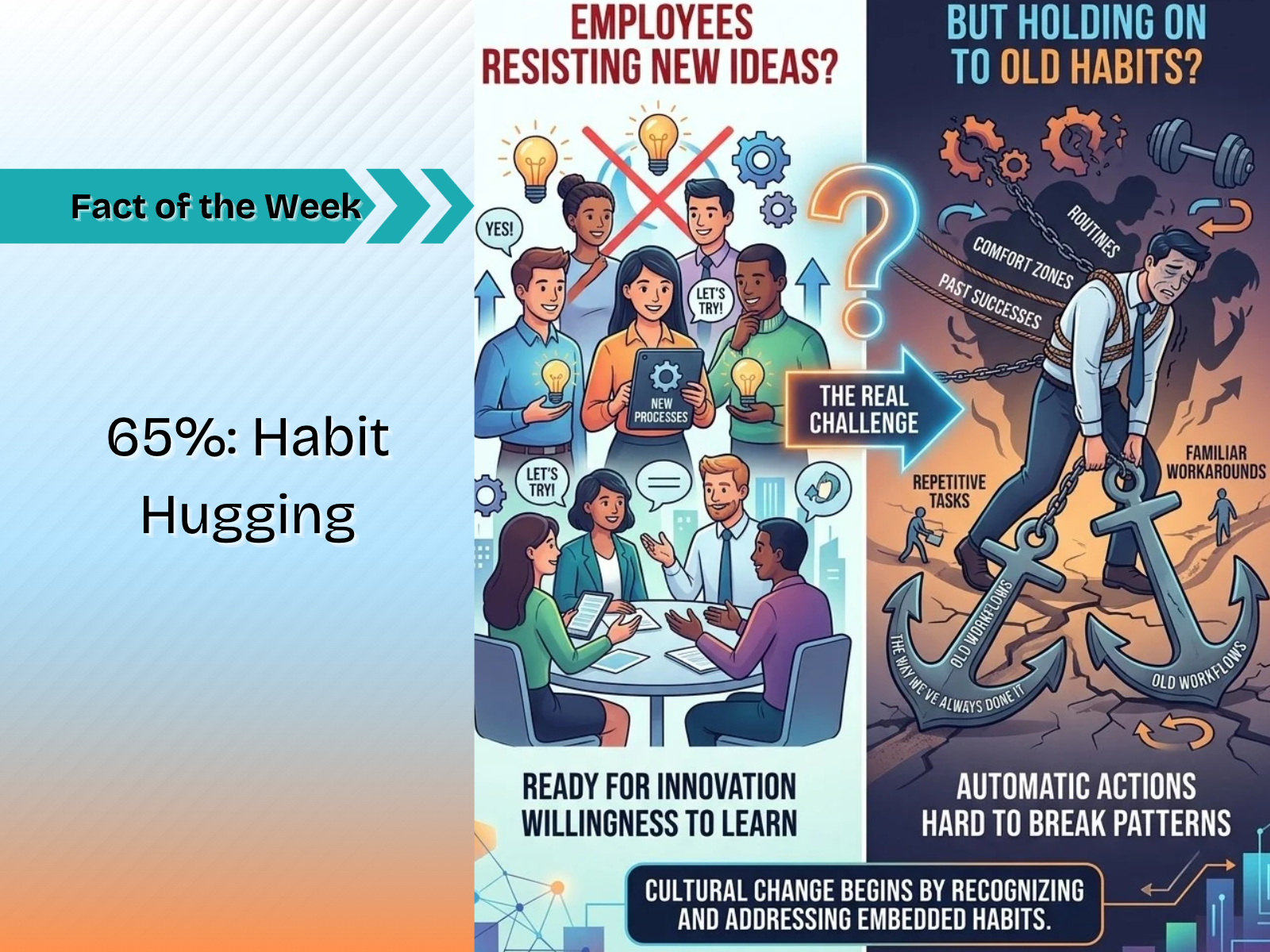
What if the biggest obstacle to workplace change isn’t employees resisting new ideas—but holding on to old habits? As businesses continue to evolve, introduce new technologies, and adapt to AI (artificial intelligence), familiar ways of working can make it difficult for employees to embrace change. TalentLMS calls this trend “habit hugging,” and it’s becoming an increasingly important workplace challenge.
According to the TalentLMS Habit Hugging Report, 65% of surveyed employees say letting go of an old work habit is harder than learning a new one. Additionally, 42% admit they still use old tools their managers think are no longer in use. These findings highlight how deeply established routines can influence workplace productivity and transformation.
TalentLMS identifies several factors contributing to the rise of habit hugging:
- The comfort of familiarity: Employees naturally gravitate toward routines and tools they already know, even when better alternatives are available.
- Change fatigue: Constant organizational changes, new expectations, and technology rollouts can overwhelm employees, making familiar workflows feel like the safer option.
- Increasing workplace complexity: With companies using an average of 93 different technology tools, employees face growing demands on their time and attention, leaving less capacity to adopt new systems.
- AI-driven expectations: While AI is intended to improve efficiency, it can also increase workloads. Roughly 31% of AI users say their employer has asked them to take on more responsibilities because of AI.
- Limited time for adaptation: Research from Microsoft found 64% of workers don’t have the time and energy to complete their jobs, making it harder to develop new habits and adjust to changing workflows.
The bigger picture? Workplace transformation isn’t just about introducing new technology or asking employees to change how they work. Organizations also need to create environments that make adopting new habits easier. Without the right support, training, and time to adapt, even the most promising workplace improvements can fall short.
For business and technology leaders, the opportunity lies in looking beyond technology adoption—building a culture that supports continuous learning, reducing unnecessary complexity, and giving employees the resources they need to embrace new ways of working. After all, successful transformation is about changing the habits that shape how work gets done.