

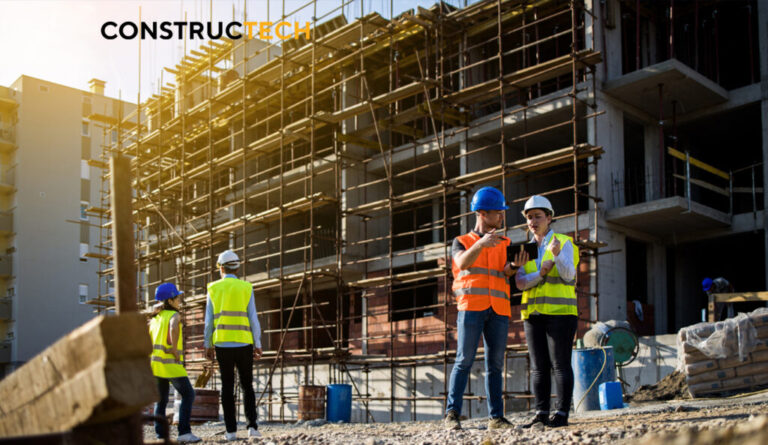
Construction Safety Week, which is May 4-8, serves as an important reminder of the shared responsibility we are all required on creating safer construction jobsites. Safety is not just a buzzword. Let’s set the record straight right now. This six-letter word must be a prerequisite if we want to ensure everyone goes home safely at the end of each day. It is so important, it needs to be a fundamental part of the job. And this means focusing on education, awareness, and proactive practices to eliminate risks while they are employed.
Here’s the challenge. We have barely scared the surface and there is still a lot of work to be done in construction. But here’s the better news: we are starting to head in the right direction. And that’s the best news to date. The most recent numbers from the U.S. BLS (Bureau of Labor Statistics) shows a 3.7% decrease from 2022 to 2023 in number of fatal work injuries across all industries in the United States, dropping from 5,486 in 2022 to 5,283 in 2023. It is a small drop, but it is progress. Even if one life is saved. That’s a step forward. But we can’t stop making moves in the right direction. A worker died every 99 minutes from a work-related injury in 2023, which is still far too frequent. One life lost is certainly one too many.
Looking specifically at the construction industry, we know it leads all sectors in terms of fatal work injuries, with OSHA (Occupational Safety Health Admin.) highlighting the fatal four in the construction industry specifically: falls, electrocutions, struck-by incidents, and caught-in between, with falls being the most common cause.
The more encouraging news is there is constant new innovation coming to market. As one example, Silent Beacon allows lone workers to call 911, alert internal safety teams, share live GPS, and enable two-way communication through wearable panic buttons.
Of course, this is only one example. Here at Constructech, we have covered many examples of how technology can help heighten safety in the construction industry. From wearable devices that monitor worker fatigue and vital signs in realtime to drones that perform construction site inspections that minimize the need to put people in harm’s way. The opportunities to use safety technology in construction are endless and getting better every day.
We have also seen the rise of advanced software platforms that can track incidents, improve reporting, and use data analytics to identify patterns. Augmented reality can also be used to visualize risks and improve training outcomes. As innovation accelerates, integrating these technologies into everyday workflows enhances safety.
As we all know, technology is only one part of the safety equation that we must consider. Construction safety must inherently be part of the culture of the daily and most importantly hourly business. When safety is embedded into everyday behavior, it becomes a shared value. This culture is built through leadership, trust, and a commitment to putting people first.

A strong safety culture is one of the most valuable assets in construction, ultimately protecting workers. In the end, the goal is to ensure every worker returns home, safely, every single day. It is something we need to be talking about this week, but it is also something we must be aiming for always in the construction industry.
Want to tweet about this article? Use hashtags #construction #IoT #sustainability #AI #5G #cloud #edge #futureofwork #infrastructure