

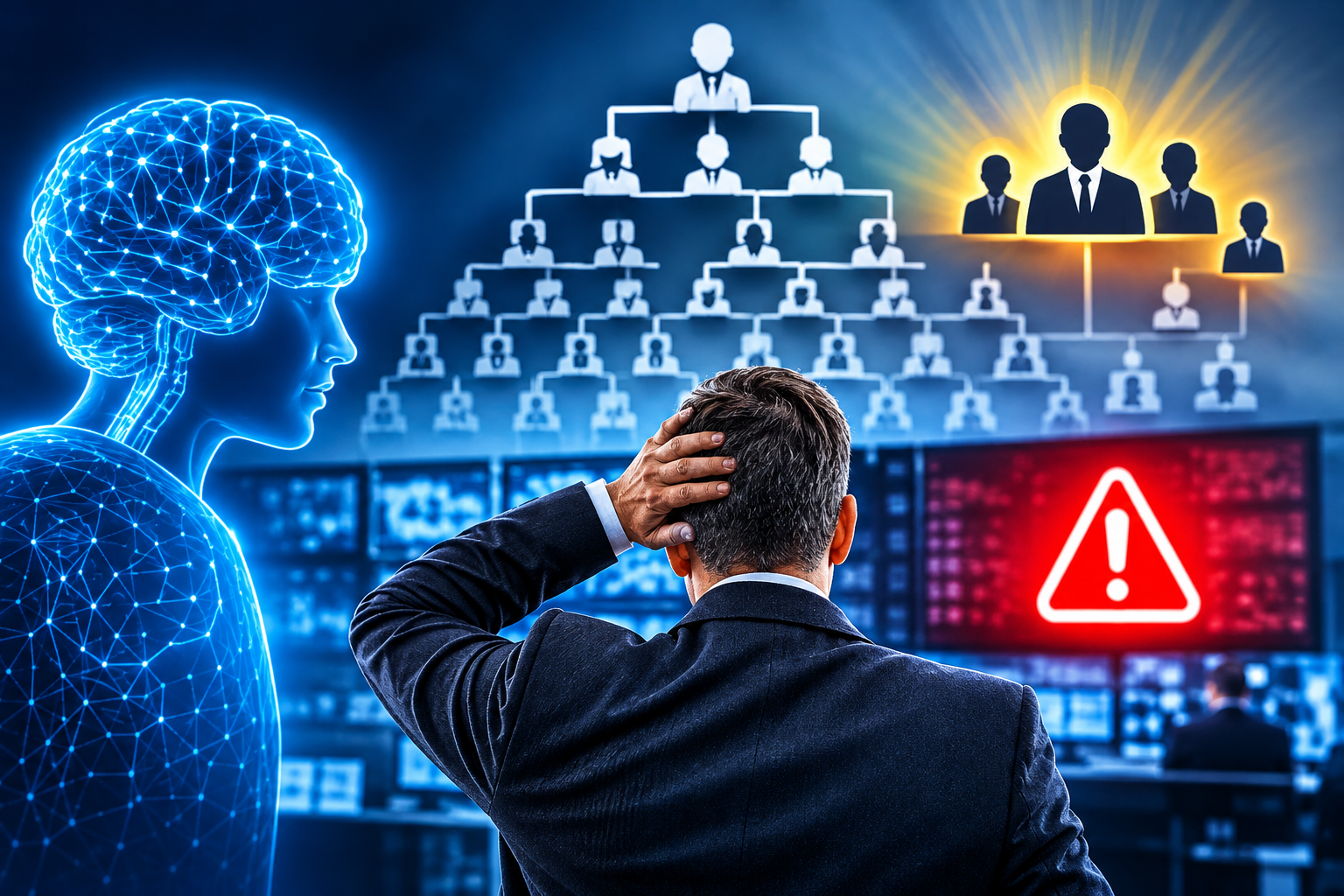
For decades, businesses have operated through layers of management, departments, approval processes, and traditional reporting structures. Information moves up the ladder and decisions move back down. But AI (artificial intelligence) is beginning to challenge that model. Let me explain.
We are entering an era where smaller teams can accomplish more, employees can access information previously reserved for leadership, and decisions can happen faster. In other words, AI is helping flatten the organization.
This was something Gartner predicted back in 2024 when the analyst firm suggested 20% of organizations will use AI to flatten their organizational structure in 2026, eliminating more than half of current middle management positions.
And that is what is beginning to happen. Traditional middle-management roles look different today than they did in 2024. But with this shift comes some growing pains.
The Disappearing Middle Manager?
Here is the hard truth: when we eliminate workers, we take some risks. If there are no middle managers responsible for the employees and, yes, the AI as well, then when a challenge occurs, we run the risk of not being able to respond quickly.
Consider Microsoft’s recent global outage, which disrupted Outlook, Teams, Copilot, and other Microsoft 365 services for more than 24 hours. It is no secret Microsoft laid off a large portion of its workforce in the last 12-18 months, including middle managers. No. It wasn’t an adult snow day.
This raises an important question: Have organizations removed so many layers of oversight that they have also removed the people responsible for recognizing problems, making decisions, and coordinating a response?
AI can help identify issues, analyze data, and automate processes, but it cannot replace the need for clear accountability and human leadership.
When systems go down, decisions still need to be made, employees need direction, and customers need answers. Flattening an organization should not mean eliminating the very people who help it function under pressure. The companies that get this right will be those that use AI to make their workforce more agile while retaining enough human oversight to respond when the unexpected happens.
If Microsoft can experience a disruption of this magnitude, it is a reminder that no organization is immune. As businesses become increasingly dependent on AI and connected platforms, we must continue to have a game plan for what occurs when systems go down.
Companies need contingency plans, alternative communication channels, clear decision-making authority, and employees who know how to respond without waiting for an automated system to tell them what to do.
Ultimately, the organizations that succeed will be those that combine the speed and intelligence of AI with human judgment, creativity, and accountability.
The New Org Chart
Now, Gartner emphasizes organizations must rethink work around value creation rather than simply automate existing jobs, meaning the goal shouldn’t be to put AI into yesterday’s organizational chart. It should be to rethink the chart altogether.
The truth is managers should not necessarily disappear, but their responsibilities should evolve. They will need to become orchestrators of people, technology, and AI agents. That means understanding where AI can add value, knowing when human intervention is necessary, and ensuring employees have the resources and direction they need to succeed.
Organizations will also need to establish clear ownership of AI-driven decisions. Just because an AI agent can perform a task doesn’t mean it should operate without oversight. Someone needs to be responsible for monitoring performance, addressing mistakes, managing risk, and determining when a human needs to step in.
This also means investing in employees differently. As routine tasks become automated, skills such as critical thinking, adaptability, communication, creativity, and problem-solving will become even more important. Employees will need to understand how to work alongside AI, question its recommendations, and recognize when something isn’t right.
AI will undoubtedly change the way businesses operate. The future belongs to organizations that know how to balance AI-driven efficiency with human leadership, accountability, and resilience. After all, the goal isn’t simply to build a flatter organization. It is to build one that can think faster, adapt quicker, and respond better when the unexpected happens.
Want to tweet about this article? Use hashtags #IoT #sustainability #AI #5G #cloud #edge #futureofwork #digitaltransformation