
Technology and innovation are playing an increasingly important role in addressing food waste and food insecurity. As companies and organizations look for smarter ways to manage resources, we are seeing new opportunities to use AI (artificial intelligence) and logistics to make a difference in communities across the country.
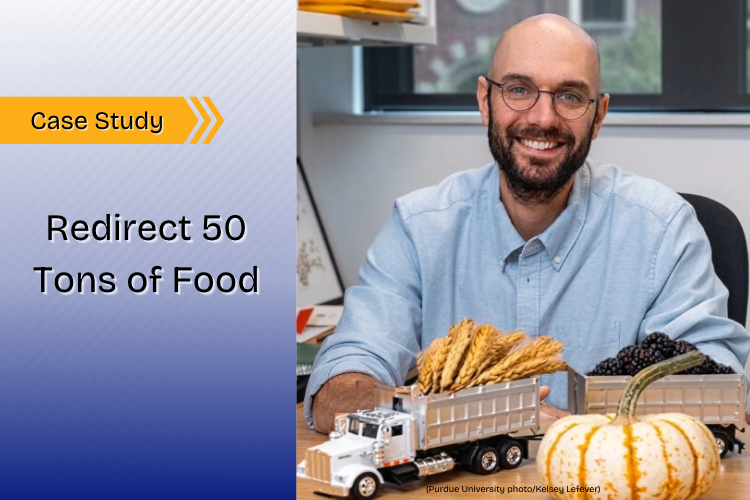
As one example, Purdue University computer science researcher Alex Psomas has developed a program called Food Drop that helps reroute truckloads of excess food from landfills to food banks and food pantries. The innovative program uses AI and optimization algorithms to identify which food banks are open, what food they need, and how much space they have available. So far, the program has helped redirect more than 50 tons of food from landfills to people in need across Indiana and Ohio.
Here is how this can help:
- Reduce food waste by redirecting usable food that would otherwise end up in landfills.
- Improve supply chain efficiency by connecting truck drivers with nearby food banks that have the capacity and resources to accept excess shipments.
- Support communities by helping food pantries receive additional food supplies and provide resources to people experiencing food insecurity.
Looking to the future, we are going to see more opportunities for technology and AI to improve efficiency across the supply chain. Innovations like Food Drop demonstrate how smarter logistics can help address major challenges while creating positive environmental and social impacts. We will certainly keep an eye on how these technologies continue to evolve and help build a more sustainable and resource-efficient future.