

Self-driving cars are often judged by their crashes, but perhaps there is a different question we should be asking: What can the data tell us about the future of transportation safety? The data does tell us an interesting story. Across five U.S. metropolitan areas, robotaxis recorded fewer injury crashes per mile than human drivers, and yet the findings also reveal why we cannot declare victory on autonomous vehicle safety just yet.
Consider the geography. The San Francisco Bay Area recorded one of the highest rates of reported robotaxi crashes and Phoenix had one of the lowest. At first glance, this might suggest autonomous vehicles perform better in Arizona than California. But the hard reality is this: traffic density, road design, driving behaviors, and operating conditions all influence crash rates.
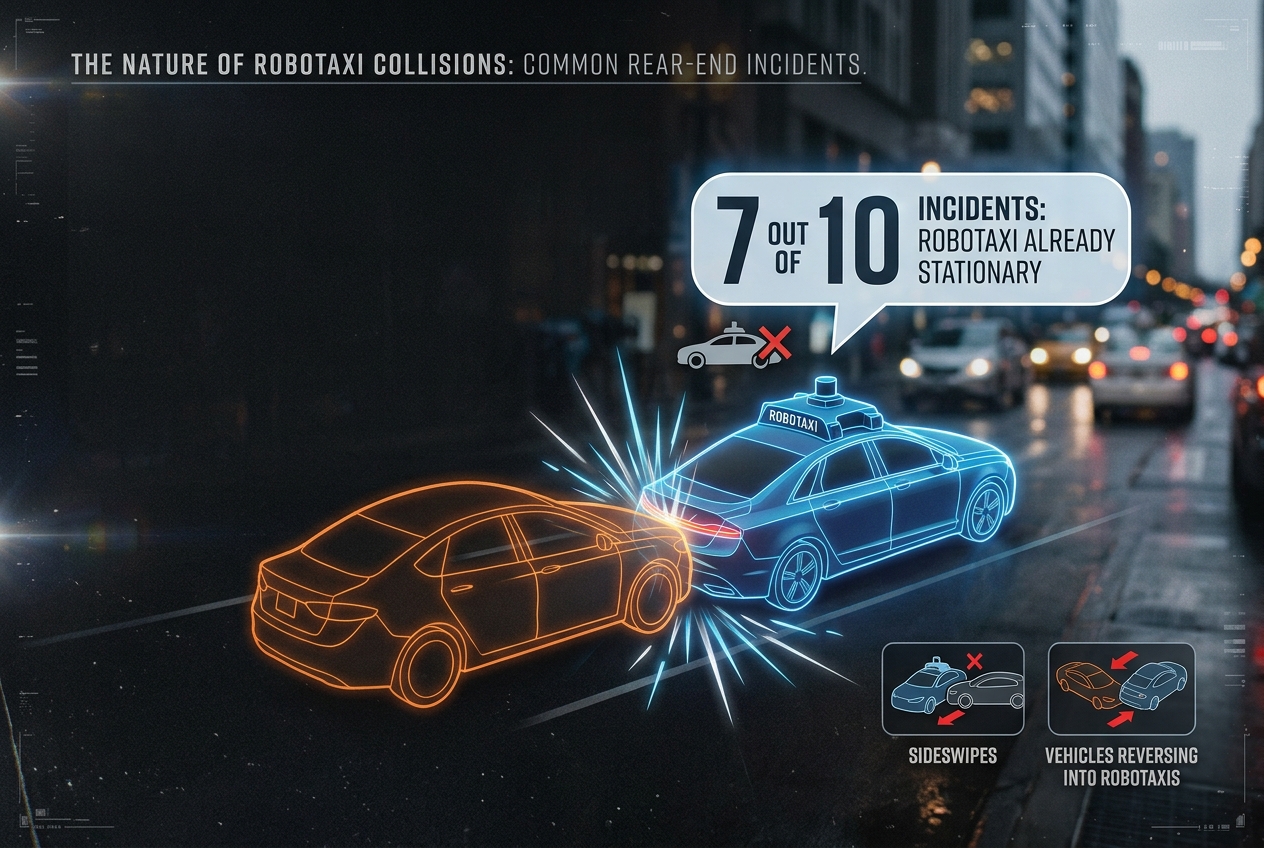
What I find interesting is the nature of these collisions. The most common robotaxi crash involved another vehicle striking it from behind. In nearly 7 out of 10 incidents, the robotaxi was already stationary. Sideswipes and vehicles reversing into robotaxis were also common. Think about what that means for a minute.
We often envision autonomous vehicles crashing because technology fails to interpret the world around them. Has that happened? Sure, occasionally. But these findings suggest many reported incidents involve other drivers hitting a vehicle that is already stopped. Safety will require both people and machines awareness to share the road safely together.
Side note: I wonder if autonomous vehicles are sometimes too safe, following the rules of the road to a tee. Meanwhile human drivers are following the social norms for a city. Could this cause some friction for man and machine? I digress, but it is something interesting to consider.
Going forward, if we want successful implementations of autonomous vehicles on the road, we need consistent reporting and transparent data. We also need to understand what happens as robotaxis expand beyond familiar urban routes into higher-speed roads and more complex conditions.
Should we fear autonomous vehicles? No. Should we fear the technology that powers them? Also, no. Should we have continuous conversations about how autonomous vehicles will be rolled out and how man and machine will ultimately share the road together? Yes. Should we also review the evidence, over time, across different environments? Also, yes. The data will tell us what is working and what is not working. There is interesting data from my neighbor Mark, who by the way, loves his Tesla. And frankly, the way it drives, I can see why. All he has to do is put in the address and off he goes. Pretty nifty if you ask me. But again, it’s all about the data first.
Here’s the hard reality. The safest city for a robotaxi today may not remain the safest tomorrow. The data is constantly changing. Technology is constantly changing. The city is constantly changing. And the people who surround the autonomous technology in the city are also constantly changing. We must continually look at the data to understand how and why everything is changing. There are many factors that go into all of this.
The real opportunity is to learn from every collision, improve the technology, and build a transportation system in which fewer people get hurt. After all, that is the ultimate goal for our cities, correct? Safety. That is the measure of progress that matters—and that is how we will make roads safer in the years ahead.
Want to tweet about this article? Use hashtags #IoT #sustainability #AI #5G #cloud #edge #futureofwork #digitaltransformation