

The manufacturing industry is standing at a critical inflection point. The rise of automation and AI (artificial intelligence) signals a new era of work, one where innovation, intelligence, and workforce evolution converge. With this also comes the opportunity to bring manufacturing back to the United States, which is something I have been championing for more than a few decades. I almost can’t believe it has been that long now.
The key will become how organizations align innovation and execution because the hard reality is innovation needs to be practical, scalable, and sustainable. The exciting part is we are beginning to see what is possible in some recent case studies taking place right here in the United States.
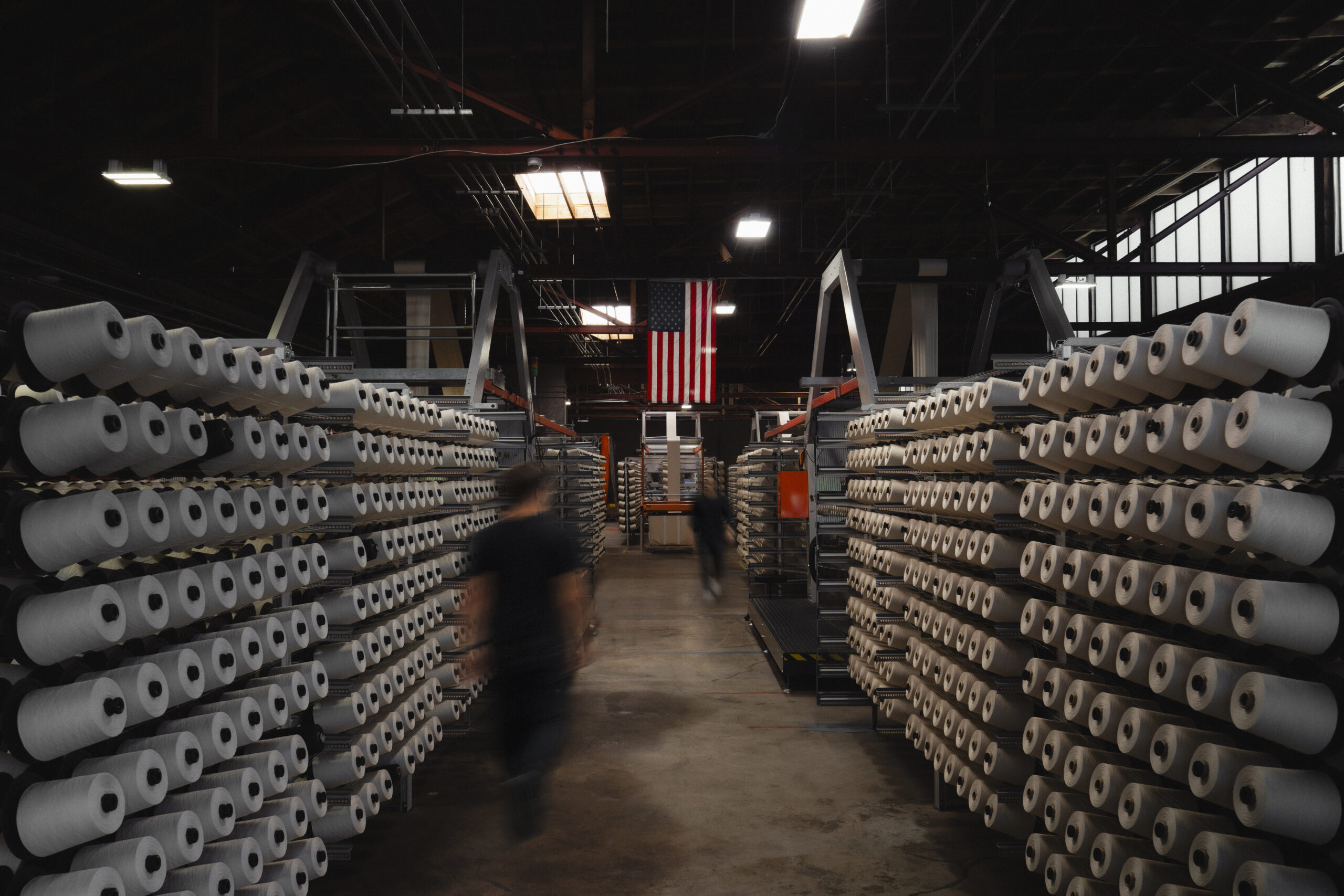
Case in point: Earlier this month, brands such as Walmart signed letters of support for unspun’s plan to build domestic manufacturing capacity in the United States using an AI-enabled 3D weaving technology. What exactly is this? It is an AI-enabled system that produces garments directly from yarn via a highly automated process.
What makes this announcement especially meaningful is that it brings manufacturing back home—a principle I’ve long championed and the very idea that inspired me to write Mending Manufacturing.
In this instance, the platform allows brands to produce closer to demand, reorder within the same season, and significantly reduce excess inventory, which is an issue that costs the industry billions each year.
The ROI (return on investment) here is impressive. By shortening production timelines from months to days, 3D weaving can improve gross margins by 400–500 basis points through fewer markdowns and write-offs, while also supporting the creation of skilled manufacturing jobs in the United States.
This approach is designed to enable domestic, demand-driven production at commercial scale as the apparel industry shifts toward next-generation manufacturing systems.
unspun is in the process of evaluating potential locations, infrastructure requirements, and workforce training programs as it moves toward establishing the first automated apparel manufacturing hubs in the United States powered by 3D weaving technology.
Of course, this is only one example of how manufacturing is advancing here in the United States. Last year, Belden deployed physical AI systems for worker safety in factories and warehouses. The virtual safety fence applies computer vision and closed-loop control to monitor worker movements and automatically pause robotic operations when humans enter hazardous zones.
In this case, advanced AI applications enhance worker safety, improve quality, and modernize factories. Following the pilot project completed in September, the virtual safety fence solution was expected to be commercially deployed at an automotive manufacturer for pedestrian safety in warehouse environments at the end of last year.
We cannot overlook the bigger picture here. Bringing manufacturing back to the United States is within reach. We are seeing the rise physical AI is now possible because of the sensor‑to‑edge IoT (Internet of Things) infrastructure and emergence of other of innovative technologies. For years I have said reshoring is about resilience, agility, and long-term competitiveness. When production is closer to the point of demand, companies have greater visibility, tighter control, and can respond quickly to shifting market dynamics. With the rise in AI, automation, IoT, and more, we have new opportunities to bring manufacturing where it needs to be at the right time.
Of course, this is easier said than done. Success will depend on building a digitally skilled workforce and fostering collaboration across the ecosystem. As new developments like these continue to unfold, we must continue to keep an eye on the future of work in manufacturing. The key will be to integrate systems, empower workers, and build resilient operations that can adapt in realtime.
Want to tweet about this article? Use hashtags #IoT #sustainability #AI #5G #cloud #edge #futureofwork #digitaltransformation