

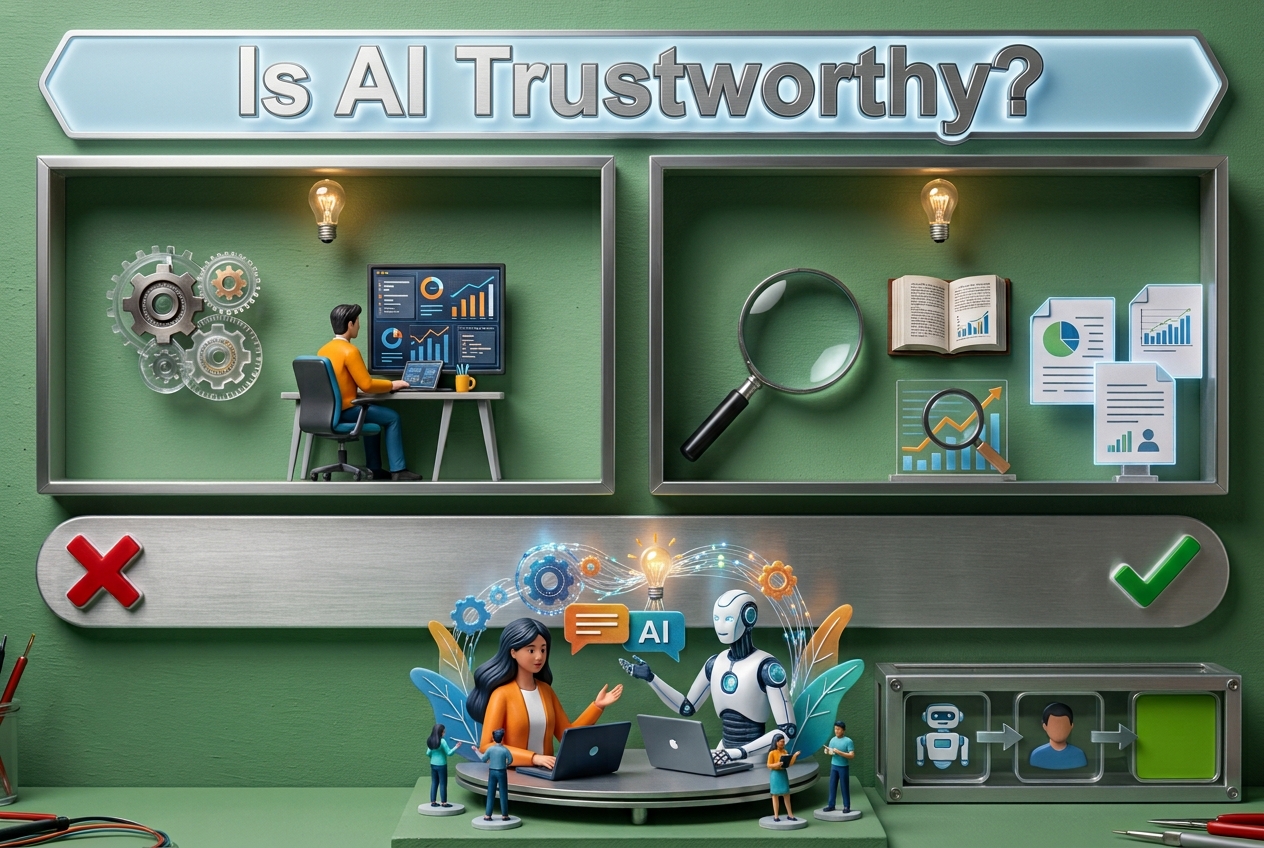
These days AI (artificial intelligence) is moving into nearly every corner of our lives, from the decisions we make at home to the systems that keep buildings and plant floors operating. But as AI becomes more capable, we need to ask a more fundamental question: Are we building technology that helps us think better, or technology that simply gives us answers?
A recent Vesela survey found 76% of daily AI users whose AI had challenged them said their thinking had become sharper. The finding points to an important opportunity. AI can be more than an answer engine. It can be a tool that questions assumptions, encourages curiosity, and helps people consider perspectives they might otherwise overlook.
Too often, the conversation about AI focuses on speed, productivity, and automation. How much time can we save? How many tasks can we eliminate? How quickly can we get to an answer? Those are important questions, but they leave out the bigger picture: what happens to our judgment when we stop working through problems ourselves?
If AI always agrees with us, we risk reinforcing our existing biases. If it always provides the quickest answer, we may miss the opportunity to learn. The most valuable AI systems will be those that know when to answer, when to ask a question, and when to challenge us to think differently.
Yet helping humans think better is only half the challenge. We must also ensure AI can reason reliably about the world around us.
Research from Archetype AI and Encord illustrates why. In tests involving medical monitoring, building HVAC (heating, ventilation, and air conditioning) systems, and atmospheric carbon dioxide measurements, AI models correctly identified patterns but produced flawed explanations of what caused them.
Think about the implications. Recognizing an abnormality is not the same as understanding its cause. Identifying an airflow problem does not necessarily mean diagnosing the underlying fault. And recognizing a climate pattern does not guarantee an accurate explanation of the physical processes behind it.
In the physical world, a convincing explanation can be dangerous. When an AI system sounds confident, people may assume its reasoning is sound. But confidence and correctness are not interchangeable. As these technologies enter healthcare, infrastructure, manufacturing, and environmental monitoring, we cannot afford to confuse a plausible narrative with evidence-based understanding.
This is where the next phase of AI development must focus: grounding outputs in measurable evidence, testing explanations against real-world conditions, and making uncertainty visible. Accuracy must mean more than arriving at the right conclusion. It must include understanding what the evidence supports—and recognizing what it does not.
Ultimately, trustworthy AI requires two forms of responsibility. Technology must help people retain and strengthen their ability to think, while giving them good reason to trust its conclusions.
The future should not be about making humans less involved or machines sound more intelligent. It should be about creating systems that improve our decisions without obscuring the evidence behind them.
Want to tweet about this article? Use hashtags #IoT #sustainability #AI #5G #cloud #edge #futureofwork #digitaltransformation