

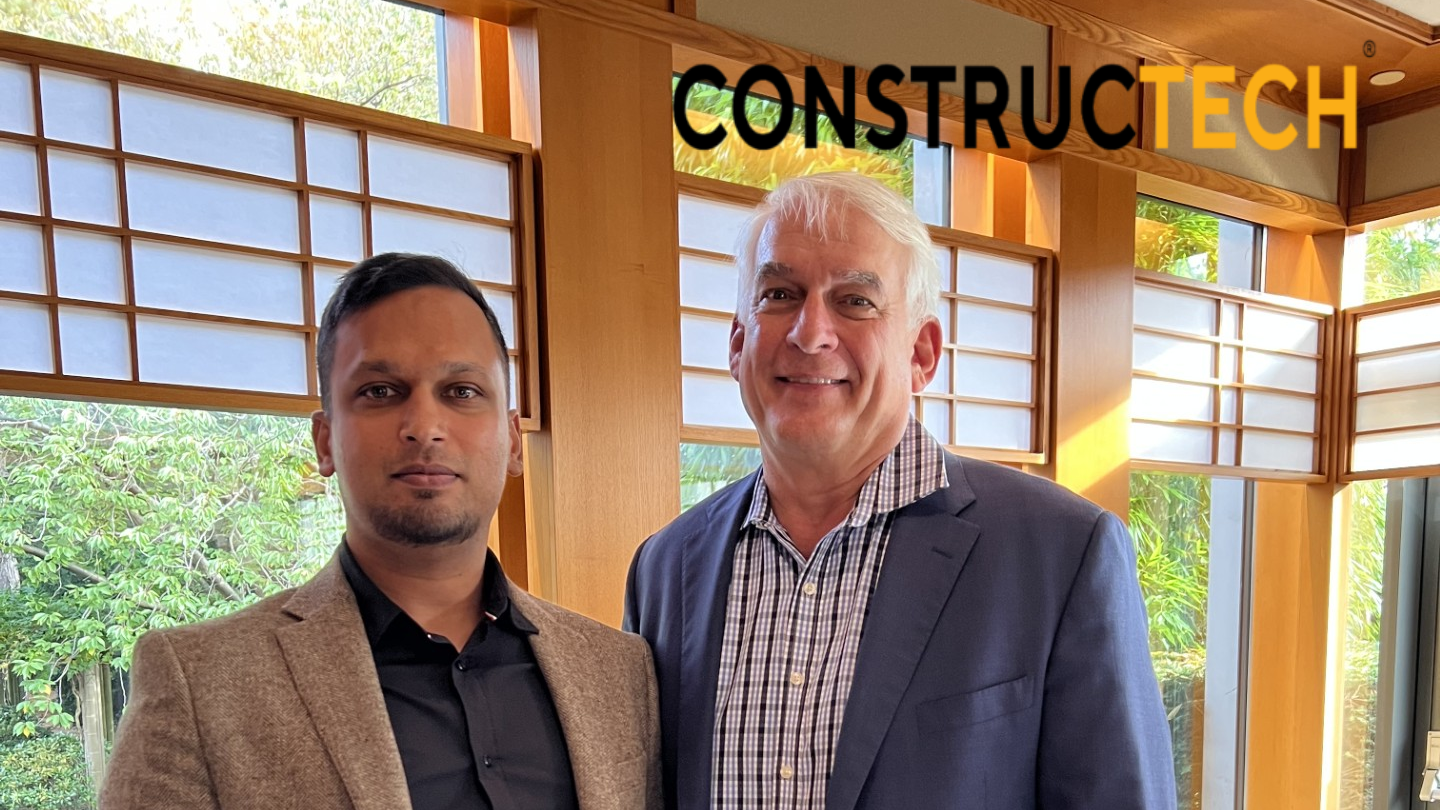
His name is Irfaan Peerun, Griffith University, Australia. That’s the name you should be pondering as we continue to introduce you to him. And if you have been following this blog for some time, then you will likely have heard many of the statistics related to the labor shortage in the construction industry. Here in the United States, we know the industry is short roughly half a million workers on top of the normal pace of hiring. Over in Australia, the government needs to have 1.2 million houses built by 2029—and the country is hosting the Olympics in 2032, thus it needs more skilled workforce as well. Where can we start? Education.
This is precisely one of the reasons Bentley Systems launched an Educator of the Year award. “What motivates and inspires us here is the talent gap problem—both capacity and capability,” says Chris Bradshaw, chief sustainability and education officer, Bentley Systems. “We need more engineers, and we want to ensure both the current and next generation of professionals are equipped with the skills and knowledge they need to be successful in the industry.”
Bradshaw says Bentley Systems solicitated nominations in the early summer for an educator of the year and modeled the competition after the Going Digital awards. The winner is selected by a panel of independent judges and is recognized for innovative teaching methods, impactful student engagement, and the integration of cutting-edge engineering software and technology into the curriculum.
“In essence, it was about understanding students’ perspectives,” says Bradshaw. “We assessed whether candidates were engaging beyond the campus—connecting with the community—and whether they considered broader infrastructure issues.”
This year’s winner, of course, is Irfaan Peerun. Peerun is a lecturer in Civil Engineering and Construction Management at Griffith University, Australia and is also a practicing Geotechnical engineer. “I think the most important thing for students is exposure,” Peerun says. “If they are not exposed to it, they might not be interested.”
He shares an example he did for community engagement outreach in Queensland, Australia, which was funded by the Queensland government. Peerun did a roadshow of STEM (science, technology, engineering, and mathematics) activities and called it Building Resilient Coastal Communities, which took place across six different locations, 30 schools, and close to 200 students.
Why? “Because all these communities are prone to flood, with seawater level rising and so on. This young generation is bounded to their environment.”
Ultimately, Peerun used Bentley tools to get students to model roads, bridges, round-abouts, intersections, and used the local terrain where they are at—and then bring that infrastructure to life with animation technology.
In the early days of the pandemic, Peerun was introduced through a mentor to a Bentley colleague and while he was stuck at home Peerun was trained in-depth on how to use the technology. Ultimately, he created his own learning assessment course, where he teaches students to model different infrastructure and to bring it to life using animation software.
Of course, these are only a few examples. Peerun has also led one-day workshops called From Minecraft to Reality and Beyond.
Teaching the software is only one part of the equation. Educators today also need to teach critical thinking skills to students as well—especially as we see the rise of AI (artificial intelligence) in many walks of life.
“We don’t want students to just depend on AI to do the modeling for you, but they should have that fundamental knowledge,” says Peerun. “It should help to assist you with the model, not doing the model for you.”
At the end of the day, Peerun has a few key pieces of advice for today’s students:
- You need to be able to stand out.
- Soft skills are so important.
- Knowledge is key.
Bradshaw of Bentley Systems says, “As someone wiser than me said, the currency of today is not money, it is learning.”

Bradshaw adds, “The ability to learn, unlearn, and relearn is what separates people that are successful and not.” Ultimately, it is about having the concepts and refreshing the skills needed.
Peerun is one example of an educator who understand this and is leading the next generation of young learners to a strong future in infrastructure.
Want to tweet about this article? Use hashtags #educator #construction #IoT #sustainability #AI #5G #cloud #edge #futureofwork #infrastructure