

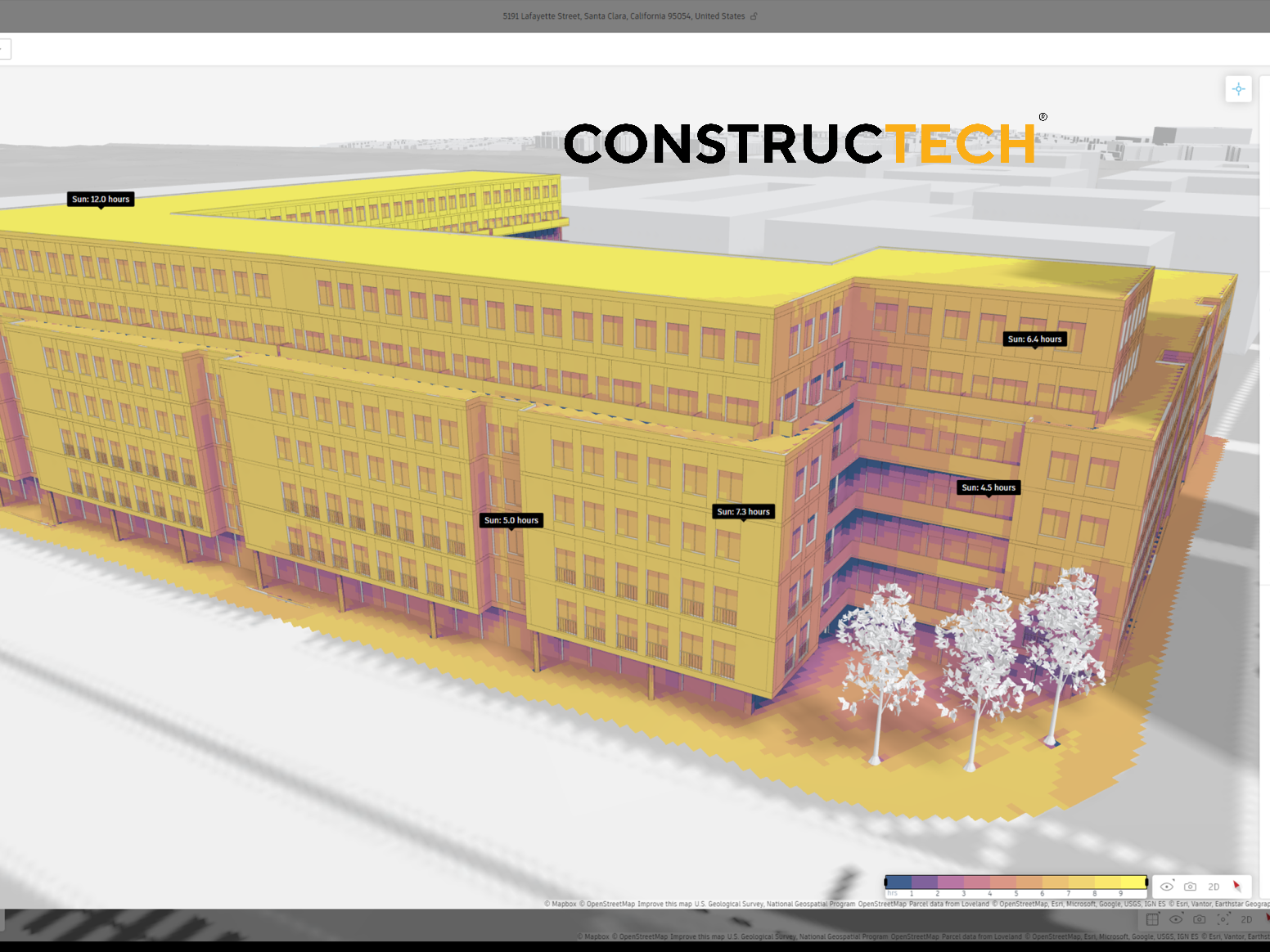
If there is one thing the construction industry has struggled with for decades, it is fragmentation and data silos. In recent years, we have seen some changes that could shake up the industry a bit. Case in point: Autodesk Forma, which saw a big announcement earlier this month.
But before we get to that new announcement, let’s journey back to the birth of Autodesk Forma. In May 2023, Autodesk introduced Forma with the early iteration targeting planning and design processes. In 2023, the product aimed to help users rapidly evaluate dozens of design options and improve upon the desired qualities of a design. The product offered contextual modeling, conceptual design capabilities, machine learning, among other options as well.
Of course, the product continued to evolve from there. By 2024, the product had integrated 3D Sketch, floor plans on 3D Sketch buildings, improved navigation and collaboration, enhanced analysis and simulation capabilities, Forma add-ins for Revit and Rhino, started to reveal the future sooner rather than later. By the time Autodesk University 2024 rolled around, the company announced the integration of Forma with Autodesk Docs, which is a centralized data environment. In 2024, the company also promised further capabilities aiming to provide an unified project experience with Autodesk Construction Cloud. This was a clear indication of the Autodesk roadmap vision.
Autodesk held true to its promise, and in 2025, the company promised users would begin to see Forma as a navigation module within Autodesk Construction Cloud. The objective was for users to be able to fluidly switch between Autodesk Construction Cloud’s construction management tools and Forma’s pre-design and schematic design tools with a connected navigation experience. At AU25, the company also shared the vision for Autodesk Forma to become an end-to-end, cloud-based, AI-native platform.
On March 24, 2026, Autodesk officially announced the next step: Autodesk Construction Cloud will become part of Autodesk Forma.
What does this mean? Product naming will evolve. Autodesk Docs becomes Forma Data Management; Autodesk BIM Collaborate Pro becomes Forma Design Collaboration; Autodesk Build becomes Forma Build; and Autodesk Takeoff becomes Forma Takeoff. Autodesk promises there is no data migration required.
Earlier this month, Autodesk announced deeper cloud connections between Forma Building Design and Revit. With this, teams can explore design options earlier, bring their decisions into detailed design, and work with greater continuity and confidence as projects evolve.
While Autodesk says there is no data migration required, we also must keep in mind other shifts happening in the broader job market. It is clear the construction industry is at an inflection point.
We are at a point in time where companies must be willing to rethink processes, rethink how workers engage with technology, break down internal silos, and embrace a holistic mindset. More importantly, I hope Autodesk will continue to focus on keeping people at the forefront of everything it is doing. Tech is important, but only in as much as the people that implement all these solutions.
The truth is there is a fundamental shift happening in how projects are conceived, designed, and delivered. The convergence happening points to something bigger. The value will depend on technology adoption—but it will also depend on leadership, strategy, and a willingness to evolve. This is the beginning of a larger shift. More importantly, one that works if you balance technology with people and build the systems that turn success into true outcomes.
Want to tweet about this article? Use hashtags #construction #IoT #sustainability #AI #5G #cloud #edge #futureofwork #infrastructure