
Consider this fun fact: 87% of business leaders expect AI (artificial intelligence) to reshape jobs within a year. However, only 29% believe their workforce is truly ready, according to Kyndryl’s 2025 Readiness Report.
Industry is so consumed by AI hype that it’s forgetting the obvious: you can’t scale what your people aren’t ready to use. Companies are buying technology faster than they’re building capability and then wondering why nothing transforms and businesses freak out. It demonstrates organizations are still thinking about jobs in static terms while technology is evolving dynamically. One new research hub aims to change all of this. AI is changing the game.
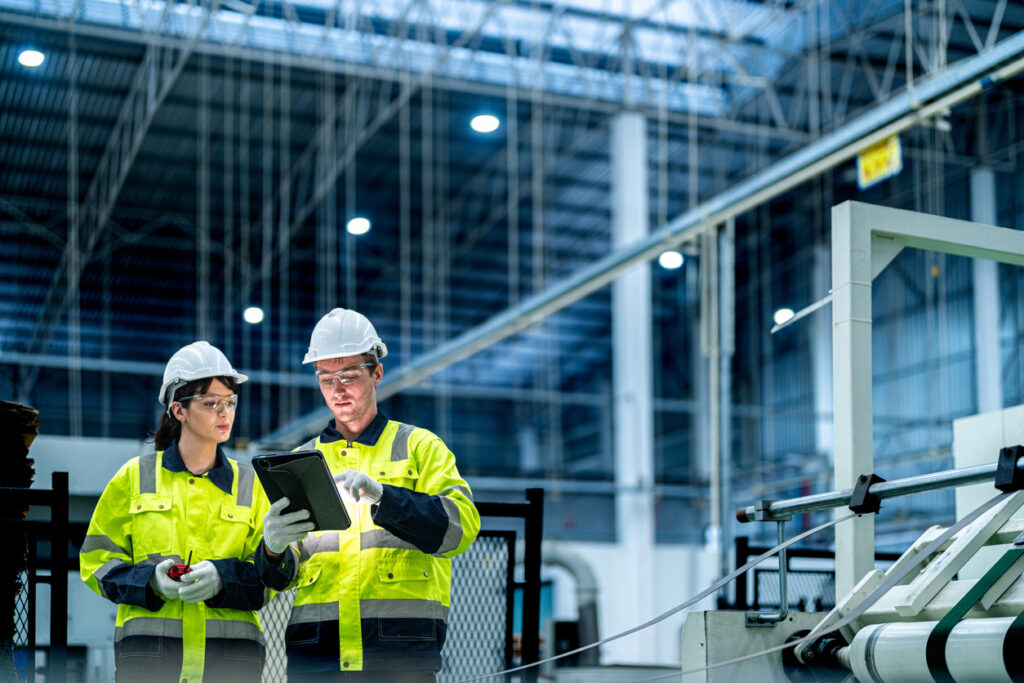
The future of manufacturing is being co-authored on the factory floor as well as in classrooms, labs, and collaborative ecosystems that rethink the very nature of work. A new partnership between Wayne State University and Kyndryl offers an example of how industry and academia are coming together to reshape the workforce for the age of AI.
At the center of this effort is the IntelliMake research hub—a pilot-scale factory and living lab designed not just to test technology, but to redefine how people and machines work together. This sounds redundant and it probably is, but you can’t implement a meaningful strategy when the workforce isn’t equipped, trained, or supported to adopt the technology. Until readiness becomes the key priority, AI investments will keep outpacing actual impact. And, in fact, will cease to advance and investments will fail.
For years, we have all heard the vendor community espouse how automation and how machines will take over tasks. That narrative is outdated and overused. Those buzzwords never delivered anything close to real transformation, and everyone knows it. We’ve been recycling the same empty language for a decade, pretending it still means something.
What we are seeing now is something far more profound and it begins with a reconfiguration of work itself.
Instead of training workers for fixed roles, the collaboration focuses on immersive, hands-on learning in areas like agentic AI, digital twins, and cybersecurity. Workers manage intelligent systems that can detect disruptions, adapt in realtime, and continuously optimize production. This is the shift from task execution to system supervision—and it has big implications.
First, it elevates the role of the human worker. In AI-driven environments, people are not removed from the process—they are essential to it. They provide context, judgment, and oversight. They train the systems, interpret the outputs, and make decisions when ambiguity arises. In short, they move up see the entire picture from a more decisive way.
Second, it demands a new kind of workforce pipeline. Traditional education models—four-year degrees followed by static careers—are no longer sufficient. The pace of AI innovation requires continuous learning, modular training, and closer alignment between industry needs and academic programs.
This is why the pilot-scale factory approach is so critical. By embedding real-world challenges into the learning environment, students and workers gain experience that goes beyond theory. They learn how to apply AI in production settings, not just how it works in principle.
Third, it highlights the importance of change management. Technology adoption is not just about deploying tools—it is about preparing people. Kyndryl’s focus on organizational change management alongside its AI framework underscores a key reality: transformation fails when the workforce is left behind.
We need to stop asking, “What jobs will AI replace?” and start asking, “What new capabilities will workers need to succeed alongside AI?”
In this new model, production lines are no longer rigid and reactive. They are adaptive systems where humans and machines continuously interact. Workers monitor performance through realtime data, intervene when necessary, and help systems learn from every disruption.
That is a very different job description than we have seen in the past. The broader takeaway is clear: workforce innovation must move at the same speed as technological innovation. Partnerships like this one show how it can be done—by breaking down silos, integrating education with industry, and putting people at the center of transformation.
The reality is the future of work isn’t about machines taking over. Rather, it’s about humans and machines learning to work alongside each other. Where are our Bobby Fischer’s and Garry Kasparov’s of today?
Want to tweet about this article? Use hashtags #IoT #sustainability #AI #5G #cloud #edge #futureofwork #digitaltransformation