

For years, manufacturers have invested in technology to improve efficiency, increase visibility, and drive operational excellence. Yet one of the biggest challenges facing industry today isn’t a technology challenge at all. It’s a knowledge challenge.
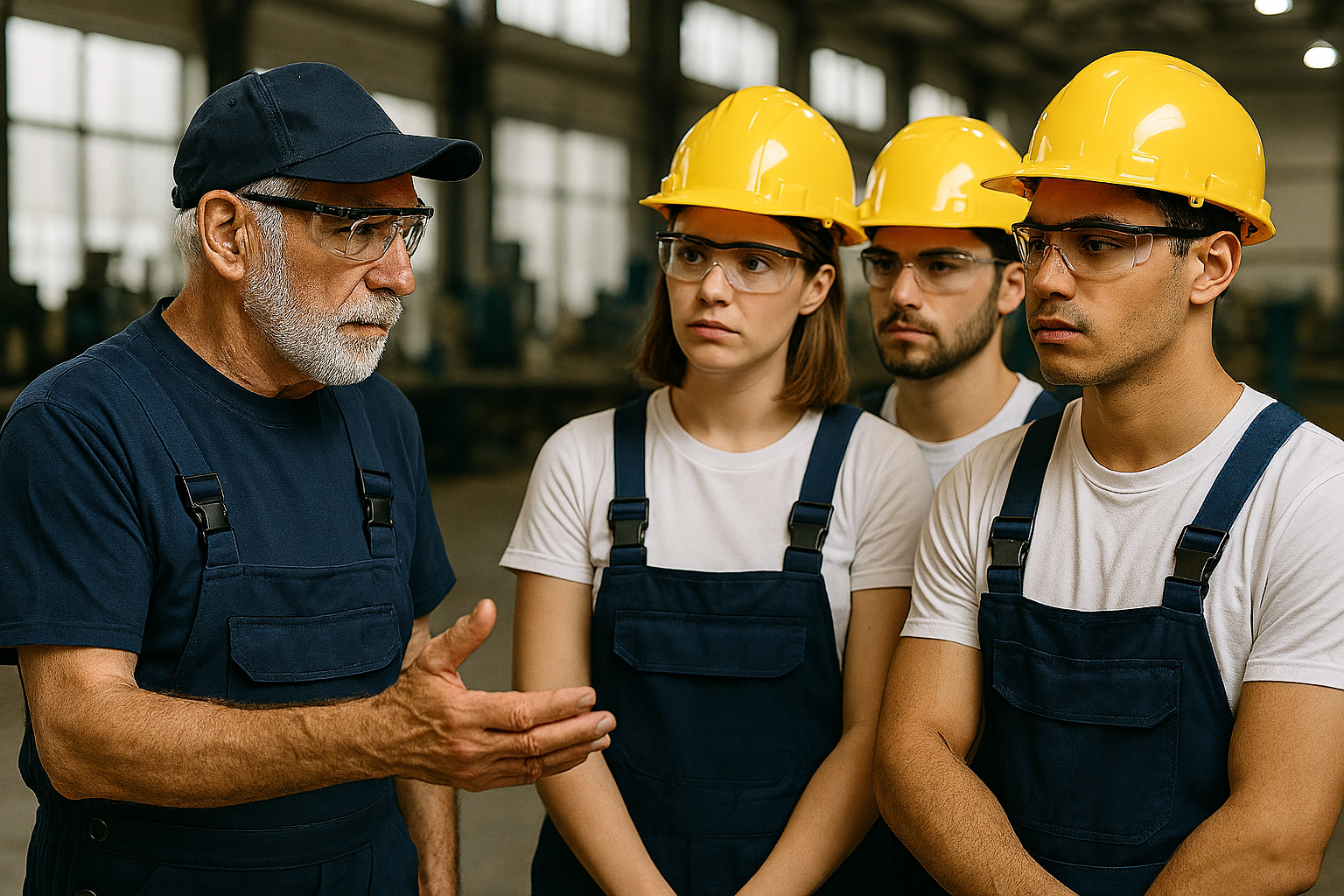
As experienced workers retire and new generations enter the workforce, manufacturers are confronting the great crew change, as Andreas Eschbach, founder and CEO of Eschbach calls it. Decades of operational expertise, tribal knowledge, and hard-earned lessons are at risk of walking out the door every day.
I recently had the opportunity to discuss this challenge with Eschbach. Our conversation centered on an important shift happening across manufacturing: the move away from isolated point solutions toward intelligent platforms that connect people, processes, and institutional knowledge.
This is particularly important in process industries, where operations often depend on information being transferred accurately from one shift, one team, and one generation to the next. As Eschbach explained, the real power comes when the knowledge is in the system.
For years, organizations focused on digitizing individual tasks and these silos of operations emerged. Today, instead of solving one problem at a time, manufacturers are looking for ways to create a continuous flow of operational intelligence across the enterprise.
Platforms such as Seqonis help organizations connect information from across operations while preserving the institutional knowledge that drives day-to-day decision-making. This approach is gaining traction among leading manufacturers including Merck/MSD, Bayer, BASF, DuPont, Roche, Sanofi, and others as they work to create more connected and resilient operations.
What makes this approach particularly compelling is its impact on workforce transitions. Eschbach described how digital knowledge sharing helps simplify the great crew change by creating what he calls a circle of knowledge. Rather than relying solely on verbal handoffs or manual documentation, organizations can create systems that continuously capture operational insights and make them available to the next person who needs them.
In essence, manufacturers are getting that circle of knowledge spinning faster. This becomes even more important as AI (artificial intelligence) enters the equation. Much of the public conversation around AI focuses on automation. But on the shop floor, AI’s most immediate value may be far more practical. Eschbach emphasized his team is focused on industry-specific AI use cases designed to solve real operational challenges. The goal is not AI for AI’s sake. The goal is to help workers access the right knowledge at the right time.
That is where the combination of data, context, and operational expertise becomes so powerful. When knowledge is captured inside a system, AI can help surface relevant insights, answer questions, identify patterns, and accelerate decision-making.
Perhaps most interesting is what happens after information is captured. Today, operational knowledge is being consumed repeatedly because it is becoming a living resource rather than a static archive. That shift represents a fundamental change in how manufacturers think about information. Knowledge becomes part of the operational workflow.
This is why platforms that unify operational data are gaining momentum. Recent innovations such as intelligent batch tracking, realtime activity scheduling, and AI-enabled operational platforms demonstrate how manufacturers are connecting long-range planning with the realities of daily execution while creating greater transparency across teams.
The organizations that succeed will be the ones that can capture expertise, share it across generations, and make it available wherever and whenever it is needed. They will move beyond point solutions and create connected environments where people, processes, and technology work together as a single system.
When knowledge flows freely across an organization, everyone benefits—from the newest operator on the shop floor to the most experienced leader in the boardroom.
Want to tweet about this article? Use hashtags #IoT #sustainability #AI #5G #cloud #edge #futureofwork #digitaltransformation