As AI (artificial intelligence) and LLMs (large language models) continue to transform software development, universities are investing in research that explores new ways to help developers build, maintain, and secure increasingly complex software systems.
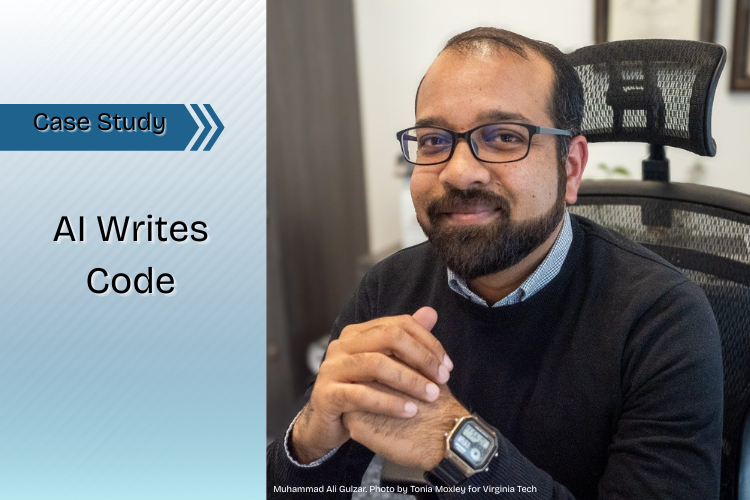
As one example, Virginia Tech computer science researcher Muhammad Ali Gulzar recently received a National Science Foundation CAREER Award to advance research on how large language models understand and interpret software code. His project, titled “Foundations of Semantic Code Understanding by Large Language Models for Software Maintenance,” seeks to improve the ability of AI systems to reason about code in ways that more closely align with human developers.
What makes this so innovative is the focus on semantic code understanding—the ability of AI systems to comprehend the meaning and intent behind software rather than simply recognizing patterns in code. By developing foundational methods for evaluating and improving how LLMs interpret software, the research aims to make AI-assisted debugging, testing, and software maintenance more accurate and trustworthy.
Here is how this can help:
- Create opportunities for skilled jobs.
- Improve software reliability and accelerate innovation.
- Strengthen collaboration between academia, industry, and technology.
Looking to the future, we will continue to see growing investments in AI-driven software engineering and intelligent development tools. As organizations increasingly rely on large-scale software systems and AI-assisted programming, research focused on improving the accuracy, transparency, and trustworthiness of large language models will play a critical role in shaping the future of digital innovation.