
With the cost of electric bills and energy rising, many homeowners are seeking out ways to reduce consumption. One area we can save energy is with the right lighting, which accounts for roughly 15% of an average home’s electricity use.
Perhaps one of the best ways to save energy costs each year is by switching to LED (light-emitting diode) lighting. The U.S. DOE (Dept. of Energy) suggests the average household can save roughly $225 in energy costs per year by making the switch. In fact, it suggests this is one of the fastest ways to cut energy bills. Residential LEDs use at least 75% less energy, and last up to 25 times longer, than incandescent lighting. I am guessing we have all heard this stat, but the bigger question is: Have we acted upon it and done something to reduce the energy consumption in our homes? The fact is every time we are just wasting money and energy.
Let’s dig in a bit deeper. LEDs are a type of solid-state lighting, meaning they use semiconductors that convert electricity into light. Pretty cool right? They are the size of a fleck of pepper and emit light in a specific direction, reducing the need for reflectors and diffuser that can trap light. Because they are small, they are ideal for lighting tight spaces such as countertops for cooking and reading recipes.
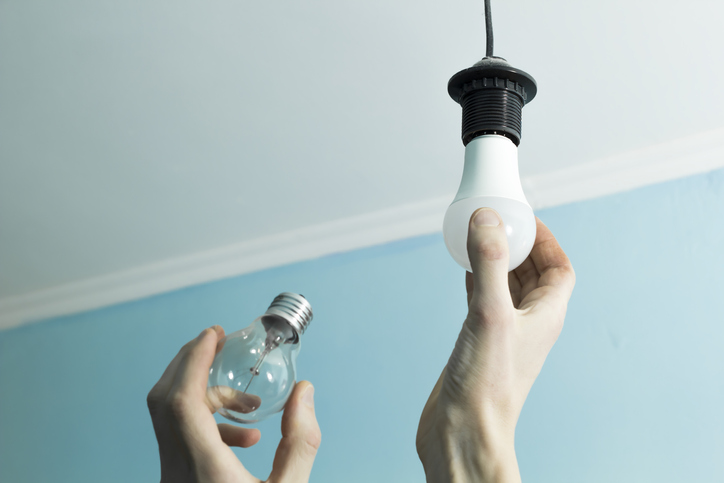
Other benefits of LEDs are they are much cooler than incandescent lights, reducing the risk of combustion or burnt fingers. Seriously, I can’t count the number of times I tried to replace a bulb and ouch! With LEDs, they are also much more resistant to breakage, and they are easier to install.
A quick history lesson for today: LEDs were once mainly known for indicator and traffic lights. Today, however, they are quickly becoming available for many areas of the home including recessed fixtures, track lighting, task lighting, undercabinet lighting, and more. Currently, the DOE estimates there are more than 600 million recessed downlights installed in U.S. homes and businesses.
I am a huge fan of using LEDs outside the home as well. LEDs do a wonderful job of brightening up pathways, step lights, and porch lights. Using LEDs or CFLs (compact fluorescent lamps) in these areas can save a lot of energy. LEDs and CFLs are available as flood lights and have been tested to withstand the rain and snow so they can be used in exposed fixtures. Homeowners can also find solar-powered LED outdoor lighting.
While LEDs typically are in white light, they can come in a variety of colors, and some can be tuned to different colors or different hues of white light. Some are dimmable or offer convenient features such as daylight and motion sensors.
While the cost of LEDs are more than traditional incandescent bulbs, LEDs tend to save money in the long run because they last a long time and have very low energy use. A good quality LED bulb can last 3 to 5 times longer than a CFL and 30 times longer than an incandescent bulb. Fun fact: The same LED string could still be in use 40 holiday seasons from now.
Here’s some other good news. The cost of LED light bulbs has decreased since they first entered the market—and the prices are expected to continue to come down even further, as more products become available.
Looking to the future, we will continue to see growth for this type of lighting. The U.S. Dept. of Energy forecasts that by 2035 the majority of lighting installations are anticipated to use LED technology, and energy savings from LED lighting could top 569 TWh annually by 2035, equal to the annual energy output of more than 92 1,000 MW power plants.
Lighting is our topic of conversation over on the Project Sustainability Podcast this month. Patrick Gall, head of channel development, Orro, and I sit down to talk all about lighting. We talk about human-centric lighting, automation, and all the health benefits that come along with smart lighting for the home. Give it a listen and let me know what you think. It just might encourage you to make the move to LED and smart lighting, if you haven’t already.
Want to tweet about this article? Use hashtags #IoT #sustainability #AI #5G #cloud #edge #futureofwork #digitaltransformation #green #ecosystem #environmental #circularworld #lighting, Orro