
For years, manufacturers have invested billions of dollars in automation, software, sensors, cloud platforms, and now AI (artificial intelligence). Yet many are still asking the same question: Why is digital transformation taking so long? The answer might just be a lack of interoperability.
That message came through loud and clear during CESMII’s recent manufacturing leadership discussion, where executives from ExxonMobil, GE Appliances, Toyota, and General Mills agreed on one important point: The future of manufacturing depends on making data move as freely as ideas.
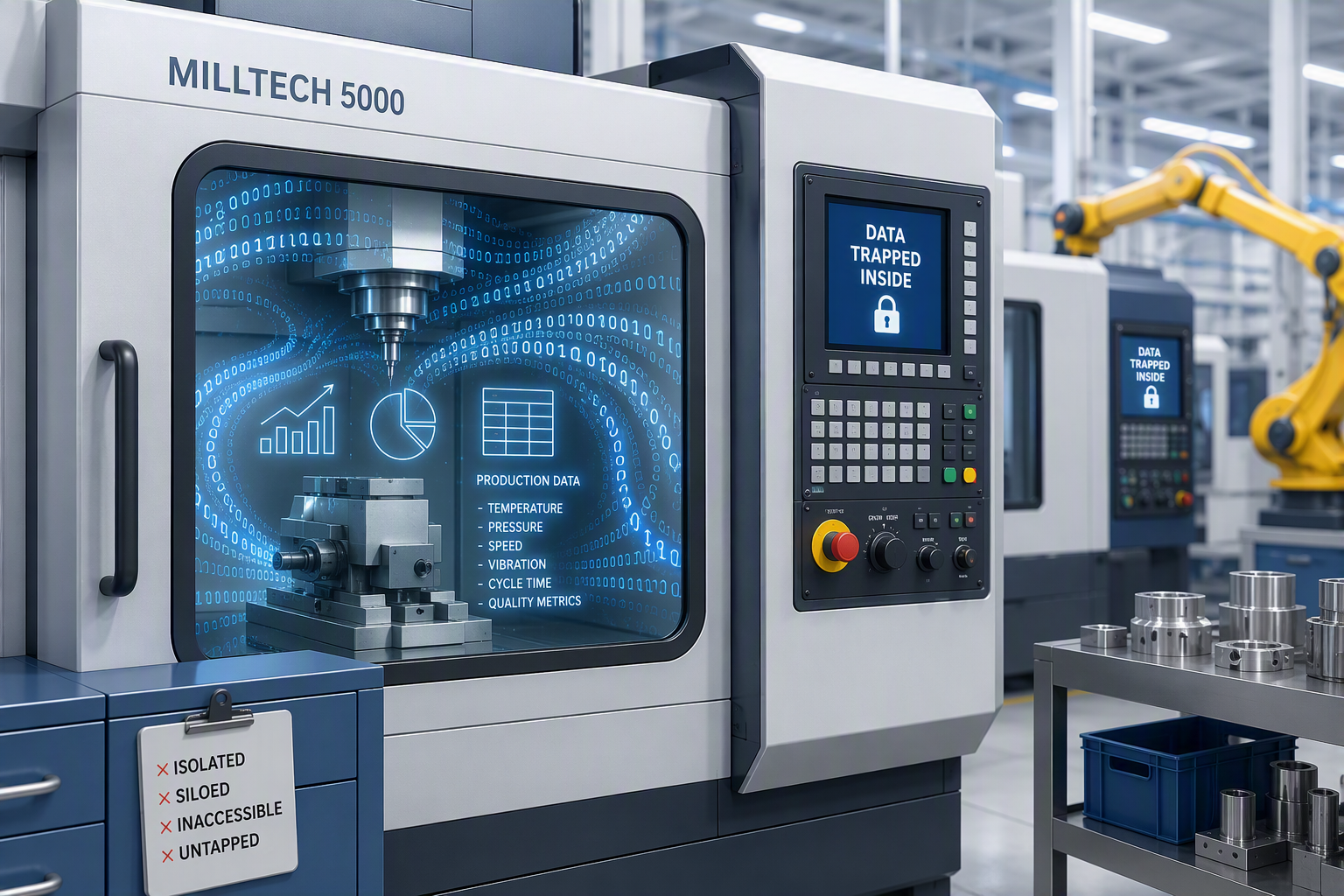
Think about it. Every day, manufacturers generate enormous amounts of operational data. Collecting the data is the easy part of the equation, and the challenge now becomes connecting it. Too often, information remains trapped inside individual machines, departments, or software systems. The result is duplicate data, expensive integrations, and AI initiatives that struggle before they ever create business value.
As Michael Hotaling, executive advisor, ExxonMobil, pointed out, success centers around creating interoperability so information can move seamlessly across systems without endless custom programming. That shift lowers barriers for innovation while opening the door for new technology providers to deliver specialized solutions without requiring manufacturers to replace everything they already own.
At the same time, the workforce itself is changing. Matthew Parris, director, GE Appliances, described a new generation of employees who expect to solve problems themselves rather than waiting for IT departments or software developers. With today’s AI tools, employees can create applications, dashboards, and workflows faster than ever before. But there is one prerequisite: They need trusted access to manufacturing data.
That is where interoperability becomes a business strategy. Perhaps the most compelling story came from Chris Crotts, general manager, Toyota North America, who described longtime plant-floor employees building digital applications after years of relying on paper-based processes. Imagine spending two decades filling out paper forms and suddenly having the tools to automate your own work. Crotts shared that some employees finally had the opportunity to solve problems they had lived with for years.
That story says as much about people as it does technology. If you have been following along here at Connected World or The Peggy Smedley Show, then you know digital transformation has always been about empowering workers. But organizations cannot expect thousands of frontline employees to innovate if the underlying data remains locked away in disconnected systems.
Lisa Zasada, senior engineering and manufacturing executive, General Mills, offered another perspective that deserves attention. Manufacturing has traditionally relied on apprenticeship. Experienced operators teach new operators. Skilled mechanics pass along years of hard-earned knowledge.
Interoperability changes that equation. When operational knowledge becomes connected through common data models and accessible systems, organizations can preserve expertise, accelerate learning, and ensure great ideas don’t stop at a single production line or facility. Instead of solving the same problem dozens of times across multiple plants, manufacturers can solve it once and share the solution everywhere. That has implications far beyond efficiency.
As experienced workers retire and manufacturers face increasing pressure to improve productivity, resilience, and flexibility, connected data becomes one of the industry’s most valuable assets. AI will certainly play an important role in this next chapter, but AI alone cannot overcome fragmented, inconsistent, or poorly contextualized information. The lesson is straightforward: Build the data foundation first. Then let innovation flourish.
Manufacturing has reached an important inflection point. The companies that thrive will create an interoperable foundation where people, processes, and technology work together—and where every successful idea can move from one worker, one plant, or one enterprise to the next.
That is how manufacturing transforms. And perhaps more importantly, that is how manufacturing competes in the decade ahead.
Want to tweet about this article? Use hashtags #IoT #sustainability #AI #5G #cloud #edge #futureofwork #digitaltransformation