
Here’s something three decades in construction have taught me: there will always be multiple vendors. And there’s never going to be one single vendor that does everything a project team needs. So, that makes the real question more interesting: how do you work with all the data across multiple platforms in a meaningful way? That is the question of this decade.
As infrastructure becomes increasingly digital, the ability to move information across systems—and preserve its meaning along the way could become just as important as the tools used to create it.
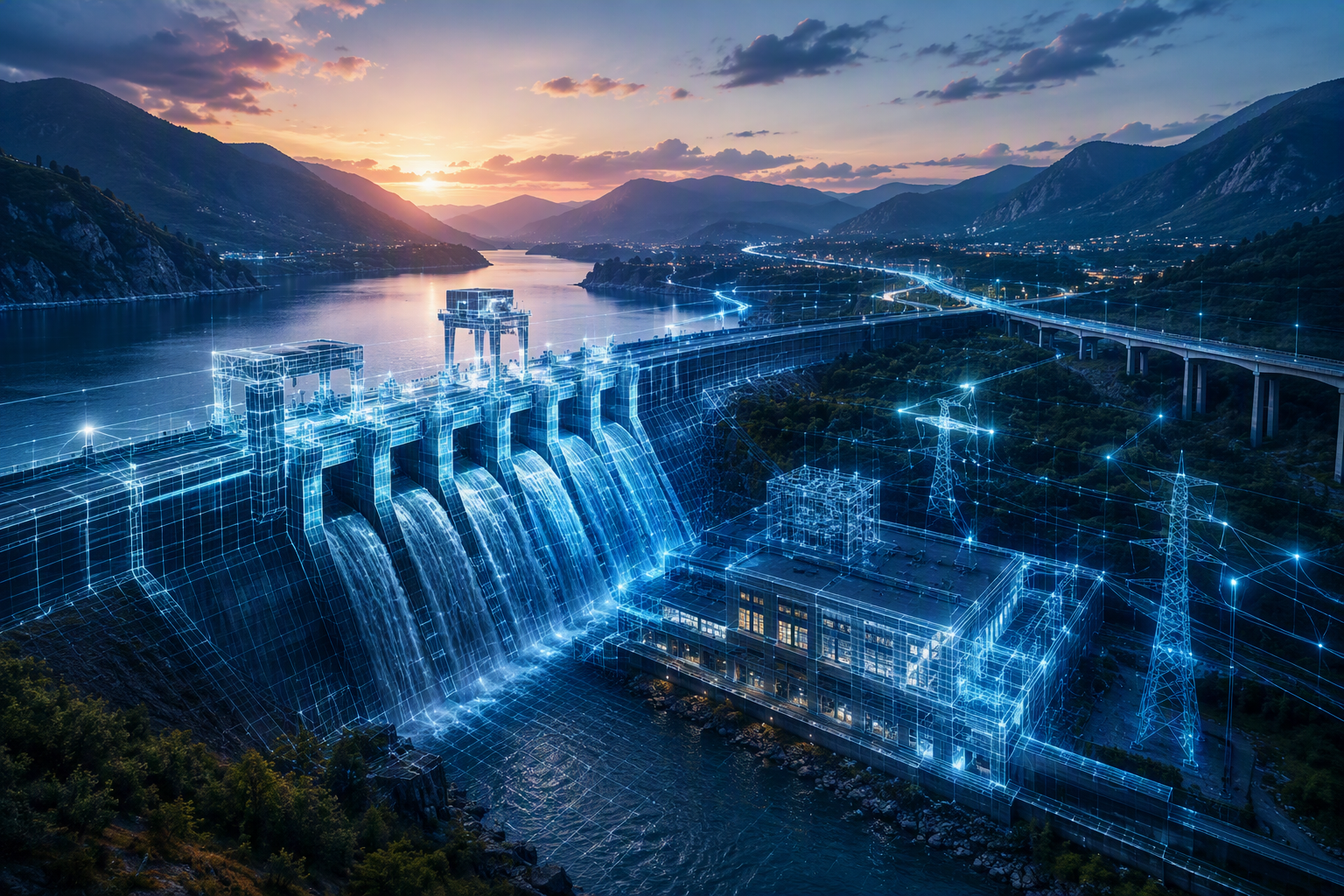
Recently, I had a conversation with Greg Demchak, vice president of emerging technologies at Bentley Systems, about why an open approach to infrastructure engineering matters, especially today. One point he made has stayed with me: infrastructure isn’t temporary. Think about that for a moment. Whatever form it takes, an infrastructure project is an asset built to endure often longer than you, me, or the people who designed it.
And when that long‑lived physical asset also has a digital version, the responsibility grows. During my interview with Demchak on The Peggy Smedley Show, he urged professionals to consider how that digital counterpart will be maintained over time without losing the information that defines it. Because if the data doesn’t last, the knowledge behind the asset won’t last either.
Demchak emphasized engineers need to think beyond construction. They must consider how the information tied to an asset will be preserved throughout its entire lifespan. Without openness, too much of that knowledge risks disappearing.
A Lossless Image
Let’s break this down simply with a clear example. Think about how we use simple file formats. Every time we hand a file over, there is a risk that the person receiving it will not be able to access it, or that some of its context will be lost.
Demchak offers a helpful analogy: a lossless image. If you open an image and save it again in a compressed format, you can lose information. Go through that process enough times and fidelity can deteriorate. There is always a risk that something similar can happen with our digital assets.
That is precisely the thinking behind Bentley Systems’ focus on interoperable open standards including the iModel, which is an open schema that basically captures all the metadata, all the geometry, all the information about an asset in a standard format that can be accessed through API or an export.
A Look at Bentley Labs
This becomes a compelling case when you look at Bentley Labs, a team of software engineers and creative technologists experimenting with what comes next. Rather than beginning with a product, the team can put open source on the table for users and run workshops designed to surface the problems people are trying to solve. Once the problem statement is clear, they can work backward toward a solution.
Imagine for a minute, an agentic system with the right permissions fetching information from one platform, pulling the relevant information to another, sending it to another platform, running some calculations, sending the results back, and it is all operating and being orchestrated. As an example, a structural engineer could use one tool stack for analytics, another for visualization, while maintaining the analytical definition, revisions, and history of the asset.
This truly gets exciting when agents can understand not only textual data, but spatial relationships, geometry, engineering information, calculations, and mathematics? That, Demchak says, is the next frontier—and it is still being defined.
Just Be Open
The takeaway from all of this is clear: just be open. Open to standards. Open to experimentation. Open to new ways of doing things in the construction industry.
“As you start to think about what does that next version of work look like for design, construction, and operations of infrastructure, just be open,” says Demchak. “Be open to the ideas you have in your mind about how you would really love that to work. (It is) actually closer than you might imagine.”
The opportunity is here now to begin connecting all of this. Now it is up to the construction industry to take that next step.
Want to tweet about this article? Use hashtags #construction #BentleySystems #OpenData #ConnectedData #TheFutureOfInfrastructureIsOpen