
Here at Connected World and The Peggy Smedley Show, we often talk about how to scale AI (artificial intelligence) in manufacturing. We live, eat, and breathe this topic. But if we really look at the numbers, it tells a much different story in 2026. Only 22% of organizations have successfully scaled AI across multiple business units or adopted an AI-first approach, according to a Gartner survey.
That number stopped me in my tracks because it tells us something important about where we really are with AI: We have spent years talking about transformation, investing in AI, and experimenting with use cases, but most organizations still have not figured out how to scale those investments across the business.
At the same time, the appetite for AI is not slowing down. Gartner found 85% of functional leaders plan to increase AI spending in 2026, even though organizations dedicated an average of 12% of their functional budgets to AI in 2025. In other words, companies are putting more money into AI while many are still trying to understand where that investment creates measurable value.
On The Peggy Smedley Show, I talk about how I believe 2027 will be a year of AI growth—and manufacturing will be one of the industries where we see that growth become especially visible. This is not because manufacturers are suddenly discovering artificial intelligence. Manufacturing has been using machine learning, robotics, computer vision, predictive maintenance, automation, and advanced analytics for years, but the next chapter is about taking those technologies out of individual projects and making them part of everyday operations.
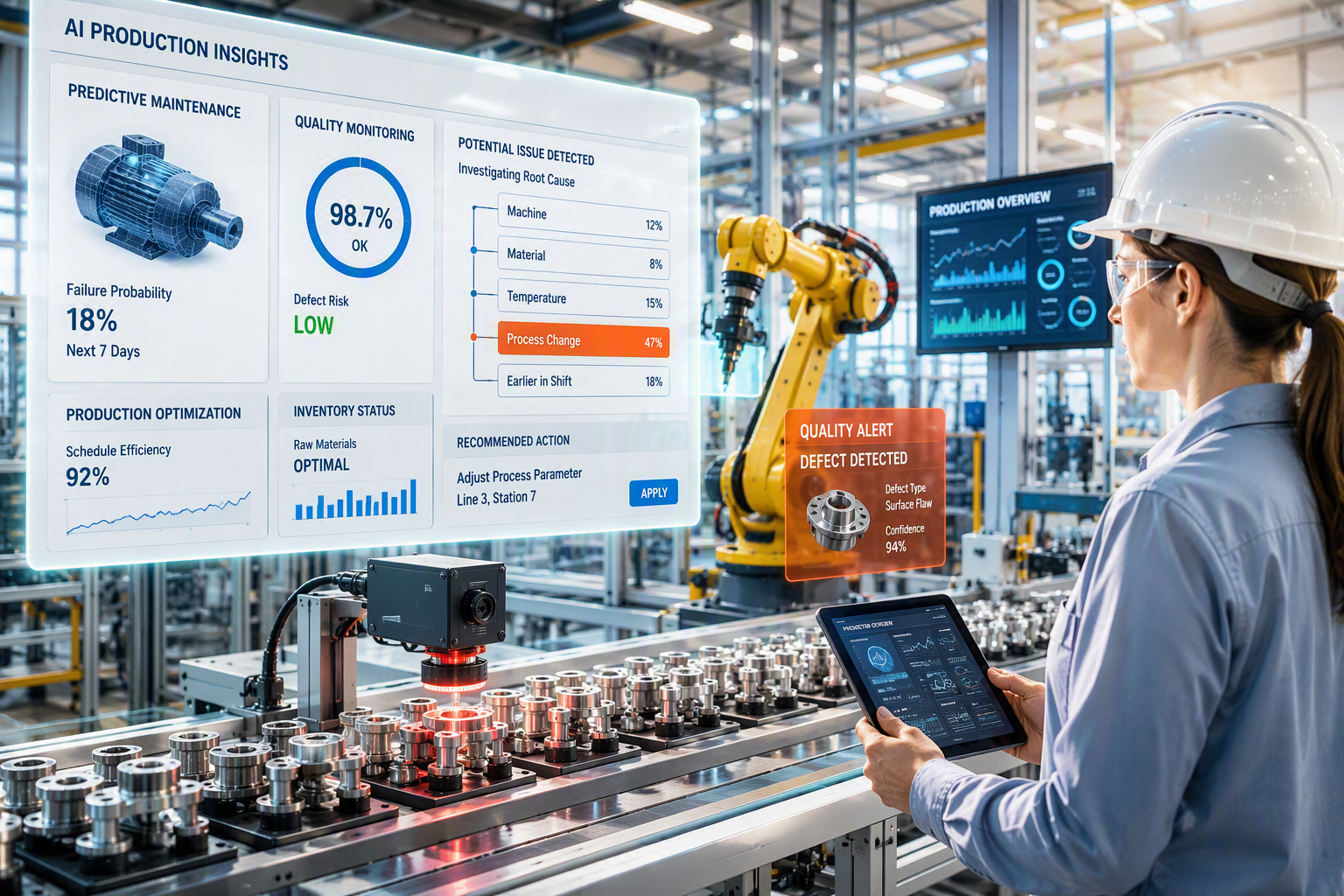
Think about what that could mean on the factory floor. AI could help predict when equipment is likely to fail, identify quality problems before products leave the production line, optimize production schedules, improve inventory management, and help engineers and maintenance teams make faster decisions. The real opportunity comes when these capabilities stop operating as isolated tools and begin working together across the organization.
Quality control is a good example. Imagine a production line producing thousands of components every day, with AI continuously monitoring the process for subtle changes and potential defects. Instead of simply flagging a problem, increasingly capable systems could help determine whether the cause is a machine, a material, temperature, a change in the production process, or something that happened earlier in the shift.
That moves us from detection toward prediction, and eventually toward action. As agentic AI develops, we could see systems monitor processes, analyze information, recommend next steps, and—in carefully governed situations—initiate actions themselves. Manufacturers will not simply be adding AI to the factory; they will be connecting AI to the workflows that keep the factory moving.
But scaling will require discipline. Gartner’s research shows organizations seeing the strongest returns are not necessarily chasing the most popular AI applications; they are identifying use cases tied closely to their business needs and measuring the results. Manufacturing leaders should take that lesson seriously because AI cannot fix a broken process, poor data, disconnected systems, or unclear decision-making.
And we cannot forget the people. The operator who knows when a machine does not sound right, the engineer who understands why a process is behaving differently, and the maintenance professional who can recognize a problem from years of experience all possess knowledge that cannot simply be replaced by a model. The future will belong to manufacturers that bring that human expertise together with machine intelligence.
So here is my prediction: 2027 will be the year manufacturing begins moving from AI experimentation to AI growth at scale. The winners will not necessarily be the companies with the most AI projects; they will be the companies that know where AI creates real value, build the foundation to support it, involve their people, and then scale what works.
The future of AI in manufacturing is not about making the factory look more intelligent. It is about making the factory actually work better—and 2027 could be the year we begin to see that happen across the industry.
Want to tweet about this article? Use hashtags #IoT #sustainability #AI #5G #cloud #edge #futureofwork #digitaltransformation