
What’s happening in the food industry? Food-service growth is expected to continue at a modest but steady pace in 2026, with real growth projected at 1.1%, slightly higher than 0.9% in 2025. The challenge is there is ongoing pressure related to costs and consumer expectations. Also, the food supply chain is under pressure like never before due to tightening regulations and persistent food waste, which is forcing the industry to rethink how it manages safety, quality, and transparency.
Still, there is good news in all this discussion. There is a wave of innovation that is changing how food moves from production to plate. The IoT (Internet of Things) and AI (artificial intelligence) are fundamentally reshaping how the industry conducts business, bringing realtime monitoring, predictive analytics, and smarter logistics to the industry. To reinforce this conversation, let’s dive into a few new reports and see what tasty trends we need to keep a closer eye.
Top Food and Beverage Trends
Earlier this year, Nestle released its Top 2026 Food Trends & Beverage Trends, which highlights how the industry is evolving. While technology is rapidly redefining what’s possible, shifting consumer preferences and changing market dynamics are equally reshaping the future of food and beverage.
The report suggests businesses are navigating industry changes, adjusting to rising food costs and labor costs. Prices for meat, produce, cheese, wine, olive oil, and seafood have been particularly impacted. Many companies are taking this opportunity to rethink sourcing, ingredients, and more. Also, labor challenges remain, but automation can help fill in the gaps.
Consumer expectations are also experiencing a transformation. The report also suggests 30% of consumers say they are more likely to eat healthy foods today compared to a year ago. Personalization is also a big trend to watch in this industry, as this has become a greater priority for consumers. Many consider pricing, portioning, and experiences carefully, and 54% of companies are managing more custom orders today than a year ago. Hyper-personalization will be a trend to watch in the days ahead.
Food Safety in the Supply Chain
Another area to keep an eye on is food safety in the supply chain. Food safety has long depended on fragmented monitoring systems and delayed responses to temperature deviations or contamination risks. But new research highlights a significant shift: the integration of IoT sensors with AI-driven analytics is enabling continuous, realtime visibility across the cold chain.
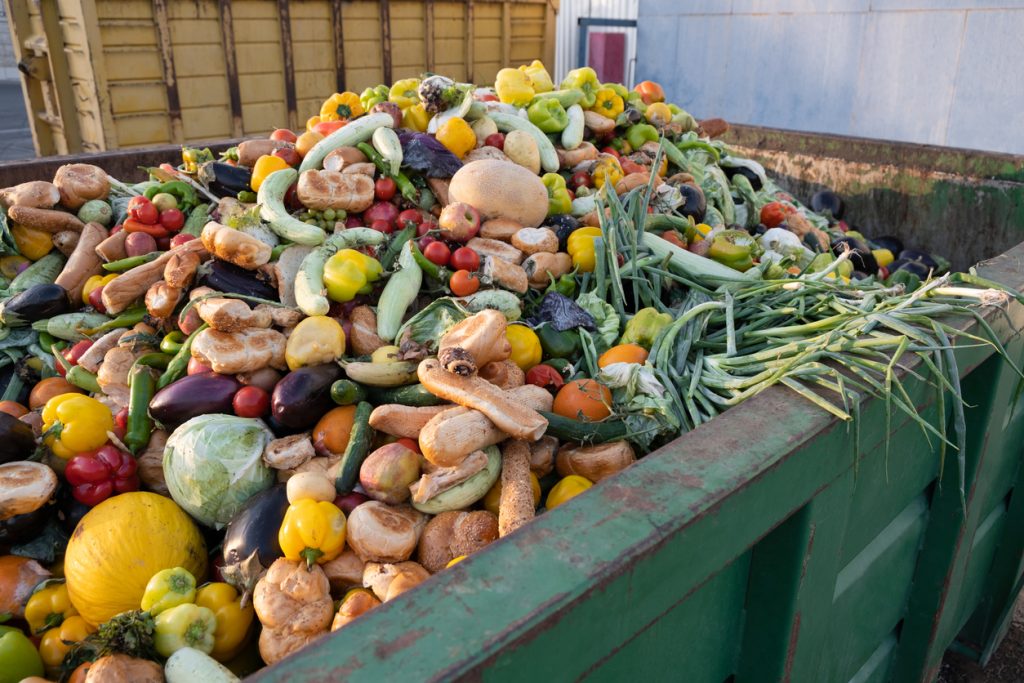
The cold chain of the future will not simply move products—it will think, adapt, and optimize in realtime. This is precisely what we see in a new academic report titled Enhancing Food Safety in the Cold Chain Through Internet of Things and Artificial Intelligence. The report points to Food Waste Index Report and the fact 1.05 billion tons of food were wasted in 2024, representing 19% of all food available to consumers across retail, food service, and households. Perishable products that rely on cold chain logistics are disproportionately affected.
The challenges here are compounded by the fact supply chains are complicated, spanning continents, where temperature, humidity, and handling practices vary wildly. Certainly, the Fourth Industrial Revolution can help here. Technologies like the IoT and AI can enable automation, predictive analytics, and traceability.
This convergence marks a turning point. Instead of reacting to failures, companies can now prevent them, reducing food waste, improving compliance, and strengthening supply-chain resilience. However, challenges remain around data standardization, system interoperability, and scaling these solutions across global operations.
Yet another challenge in this era of connectivity is that monitoring remains highly fragmented. Two things have advanced unevenly according to the research. The IoT deployments are growing in scope but remain fragmented by incompatible standards. Also, AI research demonstrates high analytical performance yet relies heavily on simulated data and limited field validation. What is needed is standardized datasets, explainable and auditable AI, and sustainable sensor networks. Ultimately, collaboration is key to enable all of this.
Still, taken together, these insights reveal an industry in transition. The integration of IoT and AI is unlocking visibility and control, while evolving consumer and market trends are raising the bar for safety, sustainability, and responsiveness. You get my point here.
Organizations that embrace this shift toward predictive, data-driven operations will lead the next era of food logistics, where efficiency and safety are no longer trade-offs, but mutually reinforcing goals. In 2026 and beyond, success will belong to those who can turn data into decisions—and decisions into resilience.
Want to tweet about this article? Use hashtags #IoT #sustainability #AI #5G #cloud #edge #futureofwork #digitaltransformation #green #circularworld #food #supplychain